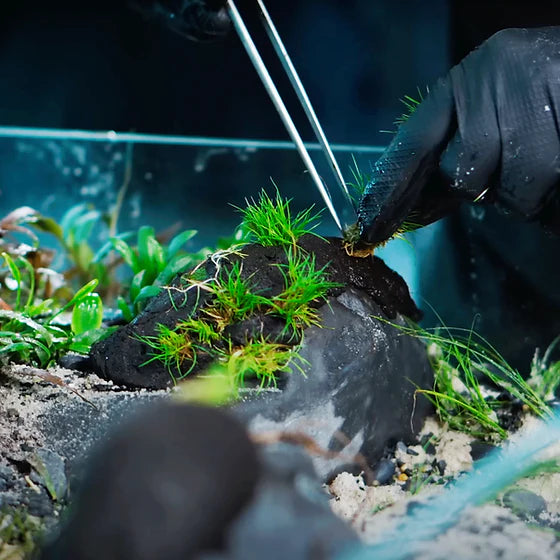
Q: What is WIO Sticky Soil used for?
A: WIO Sticky Soil is a mouldable aquascaping substrate designed to help secure rocks, wood, and other hardscape materials while creating natural-looking terrain, slopes, and transitions in aquariums, paludariums, and terrariums.
Q: How is Sticky Soil different from regular aquarium soil?
A: Unlike standard aquarium substrates, Sticky Soil has adhesive properties that allow it to stick together, making it easier to build and stabilise hardscape layouts.
Q: What can I use Sticky Soil for?
A: It can be used to secure rocks, anchor wood, create hills and slopes, fill gaps between hardscape pieces, and build natural-looking landscapes.
Q: Can Sticky Soil replace glue?
A: No, Sticky Soil is designed to help hold and support hardscape during aquascaping, but it is not intended to replace cyanoacrylate glue or epoxy where permanent bonding is required.
Q: Can I plant directly into Sticky Soil?
A: Yes, aquatic plants can be planted into Sticky Soil, and its mouldable texture helps hold stems and roots in place during planting.
Q: Does Sticky Soil contain nutrients for plants?
A: Sticky Soil is primarily designed as a hardscape-building material rather than a nutrient-rich plant substrate. If growing demanding plants, a nutrient-rich aquasoil underneath is recommended.
Q: Can I use Sticky Soil under decorative sand or gravel?
A: Yes, many aquascapers use Sticky Soil as a base layer before covering it with decorative sand, gravel, or riverbed materials for a natural finish.
Q: Can I create steep slopes with Sticky Soil?
A: Yes, one of Sticky Soil's main advantages is helping create stable slopes, raised areas, and natural terrain that would be difficult to achieve with loose substrate alone.
Q: Is Sticky Soil safe for fish and shrimp?
A: Yes, when used as intended in aquarium setups, Sticky Soil is suitable for freshwater aquariums with fish and shrimp.
Q: Should I wet Sticky Soil before using it?
A: Yes, lightly moistening Sticky Soil makes it easier to shape and mould. Avoid adding too much water, as this can make it overly soft and harder to work with.
Q: Can I reshape Sticky Soil after it has been placed?
A: Yes, before flooding the aquarium, Sticky Soil can be adjusted and reshaped until you're happy with the layout.
Q: Will Sticky Soil help prevent hardscape from shifting?
A: Yes, it helps stabilise rocks and wood during aquascape construction, reducing movement while you build your layout.
Q: Can I use Sticky Soil in paludariums and terrariums?
A: Absolutely. Sticky Soil is ideal for both aquatic and semi-terrestrial landscapes, making it a versatile choice for paludariums, terrariums, and vivariums.
Q: Is Sticky Soil suitable for beginners?
A: Yes, it makes creating natural-looking layouts much easier by allowing beginners to build stable terrain and position hardscape with greater confidence.
Q: Why choose WIO Sticky Soil?
A: WIO Sticky Soil makes it easy to build stable, natural-looking aquascapes by helping secure hardscape, create realistic terrain, and simplify the construction of beautiful aquarium, paludarium, and terrarium layouts.